EU Wine E-Label Compliance in Spain: A Complete Guide for Spanish Bodegas
Spain is the world's third-largest wine producer, and every bodega must now comply with EU e-label rules. Here is what Spanish producers need to know about regulations, enforcement, packaging requirements, and how to get compliant fast.

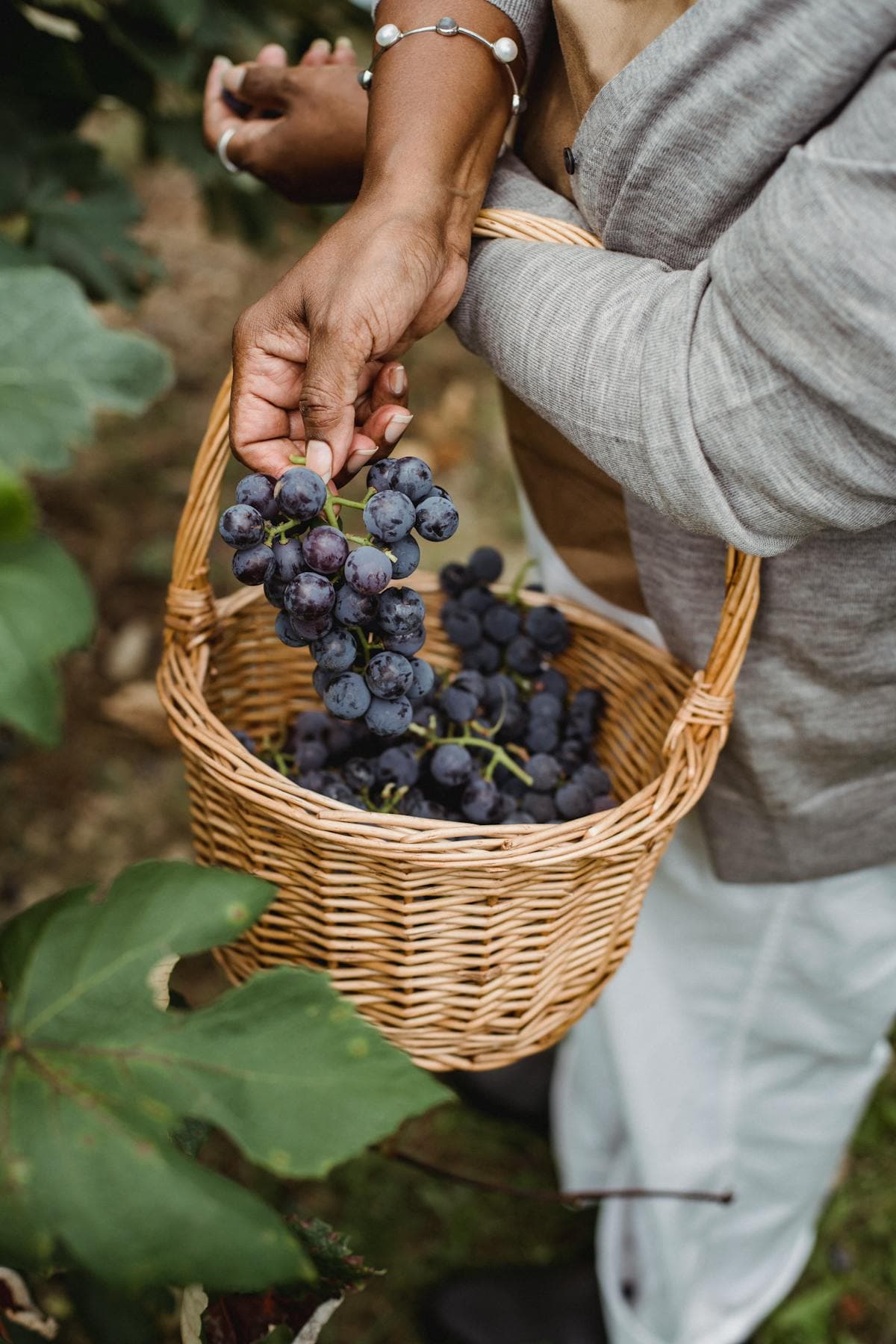
Spain is the world's third-largest wine producer and its largest exporter by volume. With over 4,300 bodegas, nearly a million hectares of vineyard, and annual production exceeding 30 million hectolitres, the scale of the EU's e-label regulations here is enormous.
That scale means the EU's e-label regulations affect an enormous number of producers, from the largest cooperative cellars in La Mancha to tiny family estates in Priorat. If you produce or sell wine in Spain, compliance is not optional. This guide walks through what the rules require, how they interact with Spain's own designation and packaging systems, who enforces them, and how to get your wines compliant quickly and at no cost.
The EU Regulation: What Spanish Bodegas Must Do
The legal foundation is Regulation (EU) 2021/2117, which amended Article 119 of the CMO Regulation (EU) 1308/2013. Since December 8, 2023, all wines from the 2024 harvest onward must provide:
- A full ingredients list, including all additives and allergens used in production.
- A nutrition declaration per 100 ml: energy (kJ and kcal), fat, saturated fat, carbohydrates, sugars, protein, and salt.
This information can be delivered through an e-label, a digital compliance page linked via a QR code on the bottle. However, allergens (e.g., "Contains sulphites") and the energy value (the "E" symbol) must always appear on the physical label itself.
These rules apply equally to a Gran Reserva Rioja, a Cava Brut Nature, a Manzanilla from Sanlucar, and a young Garnacha from Calatayud. There are no exemptions based on region, designation, or production volume.
Spain's Wine Designation System and E-Labels
Spain has one of the most structured wine classification systems in Europe. Understanding how it interacts with e-labels matters for compliance.
The Designation Hierarchy
- Vino de Mesa - table wine with no geographical indication.
- Vino de la Tierra (VdlT) - wines from a recognised geographical area.
- Denominacion de Origen (DO) - wines from a defined region meeting quality standards. Examples: Rueda, Rias Baixas, Jumilla.
- Denominacion de Origen Calificada (DOCa) - the highest regional designation. Currently only Rioja and Priorat hold DOCa status.
- Vino de Pago - single-estate wines from a recognised vineyard, such as Dominio de Valdepusa or Finca Elez.
What This Means for E-Labels
The designation itself does not change the e-label requirements. A DO Ribera del Duero and a Vino de Mesa from Castilla-La Mancha face the same obligation: full ingredients and nutrition information, accessible to the consumer. However, Consejos Reguladores (the regulatory councils governing each DO and DOCa) may issue their own guidance or audit requirements. Bodegas within a DO should check whether their Consejo has published additional e-label recommendations. Some Consejos have begun requiring proof of e-label compliance as part of their annual audits.
Spain's Packaging and Recycling Rules
E-label compliance is only one layer. Spain has also introduced packaging regulations that affect wine labels and bottles.
Real Decreto 1055/2022
Spain transposed EU packaging obligations through Real Decreto 1055/2022, which implements extended producer responsibility (EPR) for packaging. Wine producers who package their product must:
- Register with an authorised packaging compliance scheme (such as Ecoembes).
- Report the weight and type of packaging materials placed on the market.
- Display the appropriate recycling symbols on labels (the green dot or material identification symbols).
Deposit Return Schemes
Spain is developing a deposit return scheme (DRS) for certain beverage containers. While the final scope and timeline continue to evolve, wine bottles may fall within the system. Bodegas should monitor developments closely. If implemented, the DRS would require additional markings on bottles and adjustments to packaging logistics.
ScanThisWine's e-label includes a recycling section where you can specify packaging materials (glass, cork, capsule, etc.), displayed alongside ingredients and nutrition data on the same QR-linked page.
Enforcement in Spain: AESAN and Beyond
In Spain, food safety and labelling enforcement falls primarily under the Agencia Espanola de Seguridad Alimentaria y Nutricion (AESAN), which operates within the Ministry of Consumer Affairs.
How Enforcement Works
AESAN coordinates national policy, but day-to-day inspections are carried out by the autonomous communities (Comunidades Autonomas). Each of Spain's 17 regions has its own health and consumer protection inspectors who check compliance at bodegas, distributors, and retail points. This means enforcement can vary in intensity from one region to another, but the legal standard is the same everywhere.
Penalties Under Spanish Law
Spain enforces food labelling violations under Ley 17/2011 de Seguridad Alimentaria y Nutricion. Infractions are classified as:
- Minor (leve): technical deficiencies in labelling. Fines from several hundred to a few thousand euros.
- Serious (grave): missing mandatory information, misleading claims. Fines that can reach tens of thousands of euros.
- Very serious (muy grave): systematic non-compliance, health risks. Fines exceeding 60,000 euros, plus potential market restrictions.
Beyond fines, non-compliant products can be removed from shelves or blocked at customs if destined for export or import within the EU.
Challenges for Spanish Bodegas
Several things about Spain's wine sector make compliance harder.
Small Family Producers
A large proportion of Spanish bodegas are family-run operations with limited administrative staff. Many have never dealt with digital labelling requirements. The prospect of generating QR codes, nutrition tables, and multilingual information can feel overwhelming.
Cooperatives
Spain has hundreds of cooperativas vinicolas, particularly in regions like Castilla-La Mancha, Valencia, and Extremadura. Cooperatives produce wine from the grapes of many members, often across a wide range of products. For a cooperative bottling 20 or 30 different wines, each SKU needs its own e-label, and the work adds up.
Export Complexity
Spain sends wine to virtually every EU market and beyond. Each destination market may have its own language requirements for the e-label. A single Rioja may sell in Germany, the Netherlands, Sweden, and the UK simultaneously. The e-label must be accessible in the official languages of every EU market where the wine is sold. Multilingual coverage from a single QR code is essential.
Bulk Wine and Private Label
A substantial share of Spain's wine production is sold in bulk to bottlers and private-label retailers in other countries. Responsibility for e-label compliance generally falls on the entity placing the wine on the market. Bodegas selling bulk wine should clarify with their buyers who will handle the e-label, but providing compliant data proactively strengthens the commercial relationship.
Practical Steps to Comply
If your bodega has not yet addressed e-label requirements, here is a straightforward path forward:
-
Audit your current labels. Check whether your physical labels include allergens and the energy value. Check whether you have e-labels at all, and whether they contain complete ingredients and nutrition data.
-
Gather your wine data. For each wine, you need: alcohol percentage, residual sugar, the additives and processing aids used (sulphites, tartaric acid, gum arabic, etc.), and the allergens present.
-
Generate compliant e-labels. With ScanThisWine, you fill in one form per wine. The platform automatically calculates the nutrition table from your alcohol and sugar data, generates a compliant page with no tracking or marketing content, translates it into all 24 EU official languages, and provides the QR code in SVG and PNG formats ready for your label artwork.
-
Add recycling information. In ScanThisWine, specify the packaging materials (glass bottle, natural cork, aluminium capsule, paper label, etc.) to include recycling data on your e-label, helping meet Spain's packaging transparency requirements.
-
Update your physical label artwork. Add the QR code with a caption such as "Ingredientes y nutricion" or "Ingredients & nutrition." Ensure allergens and the energy value are printed on the bottle.
-
Test the QR. Scan the code in different conditions, bright light, dim cellar, through shrink-wrap, to confirm it works reliably.
-
Inform your Consejo Regulador. If you are within a DO or DOCa, let your regulatory council know you have implemented e-labels. Some are tracking compliance among their member bodegas.
Build your label at scanthiswine.com, free.
Frequently Asked Questions
Do these e-label rules apply to all Spanish wines, including Cava and Sherry? Yes. The EU regulation applies to all wines and aromatised wine products produced from the 2024 harvest onward, regardless of type, designation, or production method. Cava, Sherry (Jerez-Xeres-Sherry), still wines, and fortified wines are all covered. Wines produced before December 8, 2023, may continue to be sold until stocks are exhausted.
Who enforces e-label compliance in Spain? AESAN (Agencia Espanola de Seguridad Alimentaria y Nutricion) sets national policy, but inspections are carried out by the health and consumer protection authorities of each autonomous community. Penalties fall under Ley 17/2011 and can range from minor fines to amounts exceeding 60,000 euros for serious violations.
Does my e-label need to include recycling information? The EU e-label regulation focuses on ingredients and nutrition. However, Spain's Real Decreto 1055/2022 imposes separate packaging transparency obligations. Including recycling information on your e-label page is not mandatory under the EU wine regulation, but it helps meet Spain's packaging rules and is increasingly expected by retailers and consumers. ScanThisWine supports this.
I run a small family bodega with only three wines. Is this really necessary? Yes. There is no exemption based on production volume. Even a bodega producing 5,000 bottles a year must comply if those wines are from the 2024 harvest onward and sold in the EU. The good news is that with ScanThisWine, generating e-labels for three wines takes less than 15 minutes total, and it is completely free.
Get your bodega compliant today. Create a free e-label at ScanThisWine.