EU Wine E-Label Compliance in Italy: What Italian Winemakers Must Know
Italy is the world's largest wine producer and faces unique e-label challenges. This guide covers EU e-label rules, Italy's mandatory recycling requirements, ICQRF enforcement, and how to comply without the headache.

Why Italy Is a Special Case
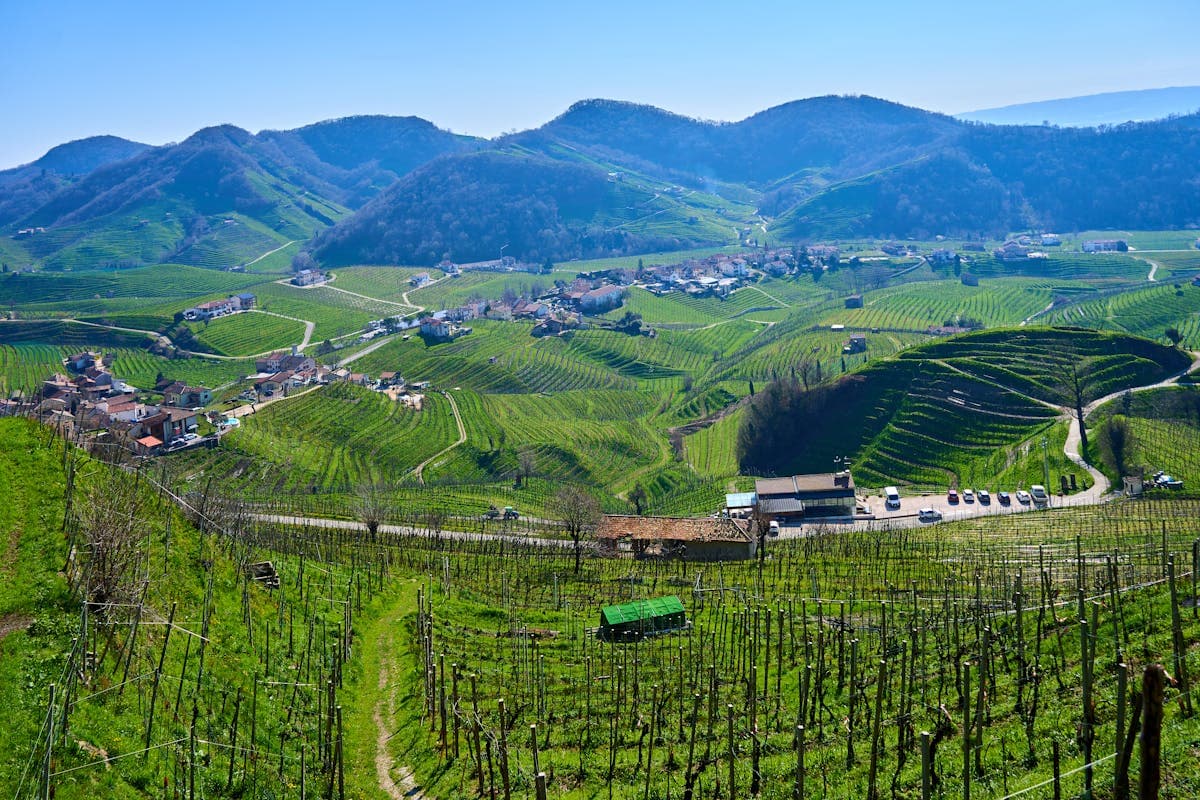
Italy is not just another EU wine-producing country. It is the largest wine producer on the planet, regularly exceeding 40 million hectolitres per year. The country is home to more than 500 native grape varieties, over 400 DOC and DOCG designations, and tens of thousands of small and medium-sized wineries.
That scale creates a unique compliance challenge. When the EU introduced mandatory nutrition and ingredient labelling for wine under Regulation (EU) 2021/2117, thousands of producers — many of them family-run estates with limited administrative resources — now need to generate compliant e-labels for every SKU they sell.
But it does not stop there. Unlike most EU member states, Italy also requires environmental and recycling information on all packaging, including wine bottles. This dual obligation is what makes Italian wine compliance distinctly more demanding than in France, Spain, or Germany.
The EU E-Label Requirement: A Recap
Since 8 December 2023, all wines produced from the 2024 harvest onward must provide consumers with:
- A list of ingredients (including additives; processing aids only if allergenic and still present).
- A nutrition declaration per 100 ml (energy in kJ/kcal, fat, carbohydrates, sugars, protein, salt).
These can be delivered via a QR code on the bottle linking to a digital e-label page. The e-label must be product-specific, contain no marketing or tracking, and be available in the official language(s) of the market where the wine is sold.
On the physical bottle, you must still print:
- Allergens (e.g., Contains sulfites)
- Energy value (using the "E" symbol: e.g., E 322 kJ / 77 kcal per 100 ml)
Grandfathering: Wines produced before 8 December 2023 may be sold under the old rules until stocks are exhausted.
Italy's Mandatory Recycling Labels: Decreto Legislativo 116/2020
This is where Italy diverges from most of Europe. Decreto Legislativo 116/2020 (implementing EU Directive 2018/852) made it compulsory to include environmental labelling on all packaging placed on the Italian market. After a series of postponements, the obligation became fully enforceable on 1 January 2023.
What Does This Mean for Wine?
Every component of your wine packaging must carry:
-
Material identification codes according to Decision 129/97/CE — for example:
- GL 70 — Clear (flint) glass
- GL 71 — Green glass
- GL 72 — Brown glass
- ALU 41 — Aluminium (capsule)
- FOR 51 — Cork
-
Disposal instructions for the end consumer (the so-called raccolta differenziata guidance), indicating which waste stream each component belongs to. For example: "Bottiglia: GL 71 — Raccolta vetro" (Bottle: GL 71 — Glass collection).
Where to Place This Information
Recycling information can appear on the physical label or — and this is the practical route for most producers — on the e-label page accessible via the same QR code that delivers nutrition and ingredient data. Italy's Ministry of Ecological Transition confirmed that digital channels are acceptable.
When you fill out the Recycling section in the ScanThisWine form, the material codes and disposal text are formatted on your e-label page, fully compliant with Italian requirements.
Common Mistakes Italian Winemakers Make
1. Treating Recycling as Optional
In Germany or France, recycling symbols on wine bottles are largely voluntary. Many Italian producers — especially those who export and import best practices from abroad — assume the same applies at home. It does not. In Italy, recycling labelling is mandatory, and omitting it is a violation.
2. Ignoring Multi-Component Packaging
A wine bottle is not just a bottle. It includes the glass, the closure (cork, screw cap), and often a capsule or foil. Each component needs its own material code. A Chianti Classico DOCG with a natural cork and aluminium capsule needs at least three entries: GL 71 (glass), FOR 51 (cork), ALU 41 (capsule).
3. Using Generic QR Codes
Some producers create a single QR code linking to a generic company webpage. EU rules require that the e-label be product-specific. Your Barolo Riserva 2020 and your Nebbiolo Langhe 2022 need separate QR codes and separate e-label pages.
4. Forgetting Language Requirements
If you sell Prosecco in the German market, the e-label must be available in German. If the same Prosecco is sold domestically, Italian is required. Your e-label platform needs to handle translations for every market you sell into.
5. Missing the Harvest Cutoff
The regulation applies to wines from the 2024 harvest onward. A Montepulciano d'Abruzzo 2024 must be fully compliant. A 2023 vintage that was produced (vinified) before 8 December 2023 can sell under old rules until stocks are exhausted — but the moment you label a 2024 harvest wine, you must comply.
Enforcement: The Role of ICQRF
Italy has one of the most active wine enforcement agencies in the EU: the ICQRF (Ispettorato Centrale della Tutela della Qualita e della Repressione Frodi dei prodotti agroalimentari). Operating under the Ministry of Agriculture, the ICQRF conducts tens of thousands of inspections per year, covering everything from vineyard registrations to label accuracy.
The ICQRF has the authority to:
- Issue fines for non-compliant labelling.
- Seize products with misleading or incomplete labels.
- Block sales until labelling is corrected.
For DOC and DOCG wines, the inspection is even more rigorous because these designations carry legal protections. An incorrectly labelled Brunello di Montalcino does not just violate EU food law — it risks undermining the denomination itself.
The ICQRF has been increasingly attentive to the new e-label and recycling requirements. Producers who have not yet adapted should treat compliance as urgent.
Timeline: Key Dates for Italian Winemakers
| Date | What Happened |
|---|---|
| 1 Jan 2023 | Italy's recycling/environmental labelling obligation (D.Lgs. 116/2020) becomes fully enforceable |
| 8 Dec 2023 | EU e-label rules (Reg. 2021/2117) enter into application |
| Harvest 2024+ | All new-vintage wines must carry compliant nutrition/ingredients (via QR or on-label) |
| Ongoing | ICQRF inspections actively checking for both EU e-label and Italian recycling compliance |
How ScanThisWine Handles Italian Requirements
Here is what happens when you fill out the form:
-
Ingredients & Nutrition — Select your ingredients from grouped lists. Click Automatic Calculator and we compute per-100 ml nutrition from ABV and sugar. Allergens are auto-bolded.
-
Recycling (Italy) — Select each packaging component (bottle, cork, capsule) with its material code (GL 70, GL 71, FOR 51, ALU 41, etc.). We format the output with proper codes and disposal guidance for the Italian market.
-
Translations — We generate the e-label page in all EU languages automatically. Italian consumers see Italian; German importers see German.
-
QR Code — Download your QR as SVG or PNG, place it on your back label with the caption Ingredienti e nutrizione.
-
No tracking, no marketing — The compliance page contains only what the law requires. No cookies, no analytics.
FAQs
Do I need recycling information even if I only sell within Italy? Yes. Decreto Legislativo 116/2020 applies to all packaging placed on the Italian market, regardless of whether you also export. If a single bottle is sold in Italy, recycling labels are mandatory.
Can I put recycling codes on the physical label instead of the e-label? Yes. You can place them on the physical label, on the e-label, or both. Many producers prefer the e-label route to keep the physical label clean — especially for premium wines like Barolo or Brunello where label aesthetics matter.
My wines are DOC/DOCG. Are there additional e-label rules? The EU e-label rules apply equally to all wines regardless of classification. However, DOC/DOCG wines face stricter ICQRF oversight and any labelling error — including a missing or non-compliant e-label — can trigger scrutiny of the denomination claim itself.
What if I produce wine in Italy but only export to other EU countries? The EU e-label requirement (nutrition + ingredients) applies wherever you sell in the EU. Italy's recycling obligation under D.Lgs. 116/2020 applies specifically to packaging placed on the Italian market. If you export exclusively and no bottles are sold in Italy, the Italian recycling requirement does not apply to those bottles — but the EU e-label rules still do.
Cover both EU and Italian obligations in one step at scanthiswine.com, free.